

How To Choose The Right Grill Tool Sets 2026
By Ray Caldwell
Most folks treat grill tools like disposable plastic cutlery. They buy a cheap set at a gas station, use it once, and watch the handle melt off when they accidentally touch the grates. That’s why your brisket looks like charcoal briquettes and your ribs fall apart before they hit the plate. You don’t need more gadgets; you need reliable iron that can survive 18 hours of low-and-slow heat without failing. In this guide, I’m cutting out the marketing noise so you can build a kit that actually works when the pressure is on.
Quick Answer
To choose the right grill tool set for 2026, prioritize heavy-gauge stainless steel or forged carbon steel construction with heat-resistant handles rated above 500°F. Avoid cheap aluminum alloys and plastic components that warp under direct flame. Look for sets that include a sturdy fork (not a tenderizer), long-reach tongs with locking mechanisms, and spatulas with thin, flexible edges for clean flips. Durability and balance matter more than the number of pieces in the box.
Table of Contents
Our Top Picks
Affiliate disclosure: if you buy through these links, we may earn a commission at no extra cost to you.

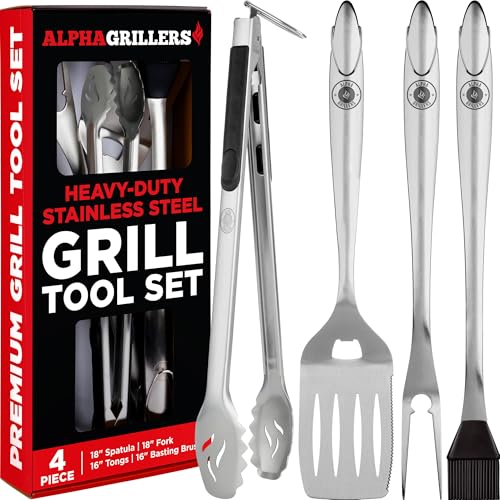

The Metal Matters: Steel vs. Aluminum
Let’s get one thing straight: aluminum is for baking pans, not for grilling tools. Cheap tool sets love to use aluminum because it’s light and cheap to manufacture. But when you’re dealing with a cast iron skillet at 500°F or flipping a heavy rib rack on a smoker, lightweight tools feel flimsy and dangerous. They bend. They warp. They break.
You want stainless steel or forged steel. Stainless is the workhorse of the BBQ world. It resists rust, holds an edge, and doesn’t react with acidic sauces. Look for "18/10" or high-grade 304 stainless on the specs if you’re buying individual pieces. If you’re looking at a set, check the weight. A good pair of tongs should have some heft to them. That weight translates to control when you’re maneuvering a massive packer brisket out of a vertical smoker.
Handle Heat: Materials That Won't Melt
The most common failure point in grill tool sets isn’t the metal; it’s the handle. Cheap sets use plastic or thin wood that chars, melts, or splinters after one summer of serious cooking. When you’re managing a fire pit or a pellet grill, your tools are constantly hovering over heat sources. Your handles need to stay cool.
Look for handles made of hardwood (like beech or acacia) or high-temperature silicone. Hardwood is traditional and feels great in the hand, but it requires oiling to prevent drying out. Silicone-wrapped handles are the modern standard for durability. They provide a non-slip grip even when your hands are greasy and can withstand temperatures up to 600°F without deforming. Avoid any tool with glued joints where the handle meets the metal; heat expands metal faster than glue, and those tools will fall apart in your hand.
The Big Three: Tongs, Spatulas, and Forks
A "complete" set is useless if the individual pieces are poorly designed. Focus on these three essentials first.
Tongs: Get spring-loaded tongs with a locking mechanism for storage. The jaws should be long (at least 10 inches) to keep your hands away from the heat. Look for serrated tips that grip meat without piercing it. Piercing meat lets juices run out, and dry brisket is sad brisket.
Spatulas: You need two types. A heavy-duty turner with a thick spine for flipping burgers and steaks, and a thin, flexible scraper for cleaning grates or lifting delicate fish. The edge must be razor-thin to slide under food without tearing it.
Forks: Ditch the double-pronged "carving forks" that act as meat tenderizers by puncturing every bite. Instead, look for a sturdy single-prong fork or a "meat claw" style tool for pulling pork. You need to hold meat steady, not shred it unnecessarily.
Grip and Balance: The Feel of the Tool
You can’t judge a tool by looking at it; you have to hold it. Poorly balanced tools cause wrist fatigue and lead to dropped food. A well-balanced grill tool feels like an extension of your arm. The weight should be distributed evenly along the shaft, not concentrated entirely in the head.
Check the grip texture. Smooth metal handles are slippery when wet or greasy. Look for knurling on metal grips or textured patterns on silicone handles. This isn’t just about comfort; it’s about safety. When you’re lifting a 15-pound turkey out of a deep fryer or moving hot coals, a slip means a burn.
Storage: Keeping Your Kit Ready
If your tools are buried in a drawer, they aren’t part of your workflow. A good tool set should come with a storage solution that keeps everything accessible and protected. Look for sets that include a hanging rack or a dedicated stand. This keeps the hot ends off the counter (where they pick up bacteria) and allows air circulation to prevent rust.
Alternatively, invest in a heavy-duty canvas roll-up case. This is perfect for tailgating or transporting your gear to a competition pit. Ensure the loops are tight enough to hold the tools securely but loose enough to pull them out quickly when you’re hungry and the fire is dying down.
Frequently Asked Questions
Are expensive grill tool sets worth it?
Yes, if you cook regularly. Cheap tools break, bend, or melt, costing you more in replacements and ruined food over time. High-quality tools last decades and perform consistently under high heat.
Should I buy a set or individual tools?
Buy individually if you have specific needs (like a long-reach probe for smokers). However, a well-curated set saves money upfront and ensures all your tools match in quality and style.
Can I put stainless steel tools in the dishwasher?
Yes, stainless steel is generally dishwasher safe. However, hand-washing and drying immediately extends the life of the finish and prevents water spots. Never leave wooden handles soaking in water.
What is the best length for grill tongs?
For grills and smokers, 12 to 14 inches is ideal. It keeps your hands safely away from direct flame and embers while providing enough leverage to move heavy cuts of meat.
Do I need a tool for cleaning my grill grates?
Absolutely. A dedicated grill brush with stainless steel bristles (or a safer coil alternative) is essential for maintaining your cooking surface. Look for one with a long handle to protect your back and hands.
The Bottom Line
Building your BBQ arsenal isn’t about collecting shiny objects; it’s about respecting the craft. When you hold a tool that’s balanced, durable, and built to handle real fire, you cook with more confidence and precision. Don’t settle for flimsy gear that fails when the smoke gets thick. Invest in quality steel, secure handles, and tools that feel right in your hand. Mastery comes from good gear and real fire.


