

How To Choose The Right Grill Baskets 2026
You don’t need another gadget gathering dust in a drawer. You need tools that survive the heat, hold their ground against the wind, and deliver consistent results when you’re trying to get dinner on the table before the kids fall asleep. Grill baskets are the unsung heroes of outdoor cooking, turning chaotic messes into manageable, smoke-infused meals. But not all wire mesh is created equal. Pick the wrong one, and you’ll be fighting a war with your vegetables while your steak burns.
Quick Answer
Choose heavy-gauge stainless steel or thick carbon steel baskets with tight enough mesh to keep small items from escaping, but loose enough to allow maximum smoke circulation. Prioritize handles that stay cool and lock securely, ensuring you never have to hover over the fire with bare hands. If you are smoking low and slow, go for a perforated design; if you are searing high heat on a gas grill, look for non-stick coatings or seasoned carbon steel.
Table of Contents
Our Top Picks
Affiliate disclosure: if you buy through these links, we may earn a commission at no extra cost to you.

Material Matters: Steel vs. Coating
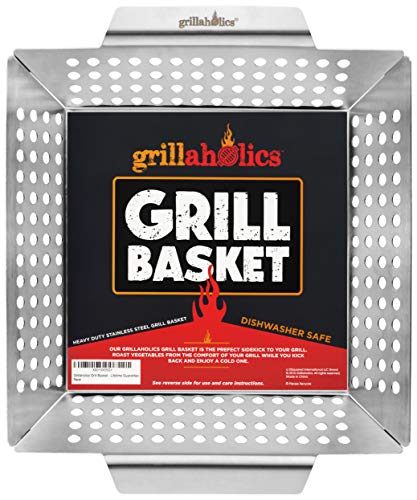
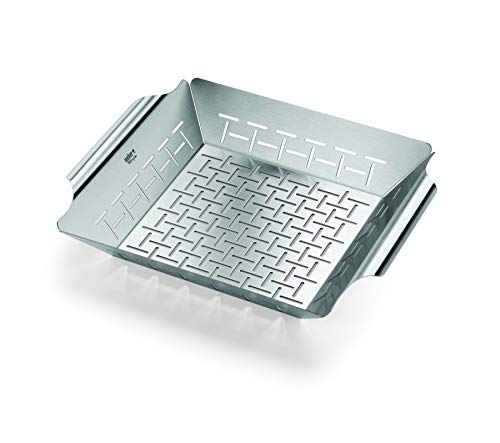
The first thing you need to decide is what the basket is made of. Cheap, thin wire baskets warp instantly under high heat. They bend when you try to flip them, and they rust within a week. You want heavy-gauge stainless steel or thick carbon steel. Stainless steel is the workhorse of the professional pit. It doesn’t react with acidic marinades, it holds up to abrasive scrubbing, and it looks good doing it.
Non-stick coatings are a different story. They have their place on a gas grill where you want easy cleanup, but they are fragile in a smoker. If you’re using wood pellets or charcoal, the sharp edges of the fuel can chip that coating. Once that non-stick layer is gone, you’re left with sticky residue and uneven heating. For true BBQ mastery, stick to bare metal.
Mesh Density and Food Safety
I’ve seen too many cooks lose their favorite peppers or shrimp to the flames below because they bought a basket with holes the size of golf balls. The mesh density dictates what you can actually cook. If you’re grilling large steaks or whole chickens, a wide grid is fine. But if you’re doing fajitas, kebabs, or delicate fish fillets, you need a tight weave.
Aim for a mesh size no larger than half an inch. This keeps your food secure while still allowing enough airflow for the smoke to penetrate. If the mesh is too dense, like a solid sheet with tiny pinholes, you’re essentially steaming your food rather than grilling it. You want the fire’s kiss, not its suffocation. Look for baskets where the wires are welded, not just twisted together, at every intersection. Twisted wires loosen up over time and create weak points.
Handle Engineering and Heat Management
A grill basket is only as good as its handle. If your handle gets hot enough to burn your skin in thirty seconds, the design is flawed. Look for long handles made of stainless steel or heat-resistant silicone. The connection point between the handle and the basket body is the critical failure zone. It should be reinforced with extra welding or rivets.
Also, consider the locking mechanism. Cheap baskets have flimsy latches that pop open when you’re trying to flip a heavy load of corn on the cob over an open flame. That’s how you lose dinner and start a grease fire. You want a solid click-lock or a screw-tight mechanism that guarantees the lid stays shut under pressure.
Shape, Size, and Compatibility
Not all grills are created equal, and neither are their baskets. A rectangular basket fits perfectly in a Weber Kettle or a Traeger pellet grill, maximizing surface area. Round baskets might wobble on flat grates or leave gaps where food can slip through. Measure your grate width before you buy. You want about an inch of clearance on each side for airflow and easy handling.
Consider the depth of the basket as well. Shallow baskets are great for searing steaks, allowing direct contact with the heat source. Deeper baskets are essential for roasting whole chickens or smoking ribs, keeping the meat elevated above the drippings while still catching the smoke. If you only buy one basket, get a medium-depth rectangular model with perforated sides and bottom.
Maintenance: Rust is the Enemy
You can’t talk about grill baskets without talking about rust. Moisture and heat create oxidation faster than anything else in your kitchen. After every cook, let the basket cool down completely before cleaning it. Cleaning a hot basket with water causes thermal shock, which can warp thin metal.
Scrub it with a stiff brush and warm soapy water. Rinse and dry it immediately. Do not let it air dry on the counter; that’s how you get water spots that turn into rust pits. Once it’s bone dry, give it a light coat of cooking oil. Store it in a dry place, preferably hanging up where air can circulate around it. A well-maintained stainless steel basket will last you decades. A neglected one will be landfill filler in two seasons.
Frequently Asked Questions
Can I use grill baskets on a charcoal grill?
Absolutely. They are actually ideal for charcoal grills because they keep small foods from falling into the coals, which is the most common cause of flare-ups and burnt food.
Do grill baskets block smoke flavor?
No, not if you choose the right one. Perforated baskets allow smoke to circulate freely around the food. Solid bottoms will trap heat and steam, so always look for perforations on the bottom.
Are non-stick grill baskets safe?
They are safe for low to medium heat cooking. However, at high BBQ temperatures (above 500°F), the coating can degrade and release fumes. For high-heat searing, bare stainless or carbon steel is safer.
How do I prevent food from sticking to the basket?
Oil the food, not just the basket. Make sure the basket is hot before adding your ingredients to create a sear that releases naturally. If using stainless steel, let the food develop a crust before trying to flip it.
Can I put grill baskets in the dishwasher?
It’s not recommended. The harsh detergents and high heat of dishwashers can damage non-stick coatings and cause stainless steel to pit or discolor over time. Hand washing preserves the finish.
Choosing the right grill basket isn’t about finding the fanciest gadget; it’s about finding the most durable tool for your specific fire. Whether you’re smoking brisket in a vertical smoker or searing steaks on a gas grill, the right basket protects your food and your sanity. Master your gear, respect the fire, and let the flavor do the rest.


