

How To Choose The Right Bbq Heat Resistant Gloves 2026
There is no shame in getting burned, but there is shame in getting burned when you could have prevented it with a few bucks and a little common sense. I’ve seen too many pitmasters lose their dexterity, their confidence, and their sanity because they grabbed a flimsy oven mitt or, worse, nothing at all. Your hands are your most important tools in the pit; if they’re incapacitated, your craft is over. Let’s talk about how to armor up properly so you can handle the heat without losing your edge.
Quick Answer
Do not buy standard oven mitts; they trap heat and limit your dexterity. Instead, choose specialized five-finger grill gloves made from food-grade silicone, aramid fiber, or heavy-duty leather. Look for a continuous-use heat rating of at least 350°F (177°C) with extended cuffs (13+ inches) to protect your forearms. Prioritize breathable, ventilated designs to keep your hands dry and maintain grip on slippery, greasy equipment.
Table of Contents
Our Top Picks
Affiliate disclosure: if you buy through these links, we may earn a commission at no extra cost to you.
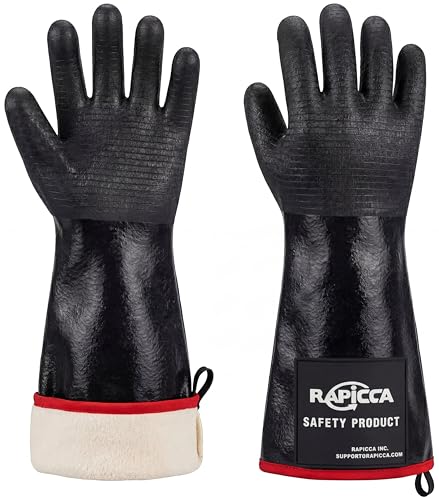


Why Oven Mitts Are a Liability
Let’s get one thing straight: a fluffy oven mitt from your kitchen drawer is not designed for the pit. Those mitts are rated for dry heat up to 400-500°F, but they are thick, bulky, and completely blind your hands. When you’re trying to adjust a grate on a smoker or flip a heavy rack of ribs, you need tactile feedback. You need to feel the texture of the meat and the stability of the tool in your hand. Oven mitts give you neither.
More importantly, oven mitts trap moisture. In the humid, hot environment of a backyard cook, sweat accumulates rapidly inside those thick fabrics. Wet fabric conducts heat faster than dry fabric, turning your mitt into a steam engine that can actually burn you worse than the heat source itself. Specialized grill gloves are engineered for the five-finger dexterity required to handle tongs, forks, and probes with precision.
Material Matters: Silicone vs. Aramid vs. Leather
Not all heat-resistant materials are created equal. You need to match the material to the task. Food-grade silicone is the modern standard for most grillers. It’s waterproof, grease-resistant, and easy to clean. A quick rinse under the hose and it’s ready for the next round. However, pure silicone can sometimes lack the durability against sharp bones or metal grates.
Aramid fiber (like Kevlar) is the heavy hitter. It offers exceptional heat resistance and durability against abrasion. It’s often used in professional kitchens and high-end BBQ gear. It’s breathable and lightweight but can be harder to clean if grease soaks into the weave. Leather is the classic choice for durability and style. It handles high heat well and develops a patina over time, but it requires conditioning to prevent cracking and can become stiff in cold weather.
The Critical Role of Cuff Length
Your hands are only half the battle. Your forearms are vulnerable when you’re reaching into deep barrel smokers, pulling racks from offset smokers, or managing charcoal chimneys. Standard gloves that stop at the wrist are useless here. You need extended cuffs, ideally 13 inches or longer. This length ensures that when you reach deep into the pit, there’s no gap between your glove and your sleeve for sparks, embers, or hot steam to sneak in.
This is especially crucial when working with fire pits or open-flame grills where flare-ups are common. A long cuff acts as a shield, protecting the sensitive skin of your forearm from sudden bursts of heat. It’s a simple feature that separates the amateurs from the pros who know that prevention is better than a bandage.
Breathability and Grip: The Sweat Factor
Let’s talk about the #1 reason people abandon their gloves: sweat. A 2023 survey showed that 41% of cooks cited discomfort from sweaty, non-breathable gloves as their primary reason for stopping use. If your hands are swimming in sweat, your grip fails. Slippery tongs mean dropped meat. Slippery gloves mean burns. It’s a vicious cycle.
Look for gloves with open-back designs or ventilated panels. These allow airflow to dissipate heat and moisture, keeping your hands dry and comfortable during multi-hour smoking sessions. Additionally, ensure the gloves offer lateral grip stability. The palms should have textured silicone grips that provide traction on wet, greasy, or smooth surfaces. This prevents friction-related microtears on your knuckles and palms while handling slippery, hot surfaces.
Understanding Heat Ratings
Heat ratings can be confusing, but they are your primary indicator of protection. Look for the continuous-use heat rating, which tells you how long the glove can withstand a specific temperature without degrading. For general grilling and smoking, a rating of at least 350°F (177°C) is the baseline. This covers most indirect heat cooking scenarios.
If you’re working with direct flame, charcoal chimneys, or fire pits, you need higher ratings. Professional-grade options offer protection up to 932°F, and maximum protection gloves can handle up to 1,472°F. Remember, these ratings are for dry heat. Wet heat (steam) transfers energy faster, so even if your gloves are rated for high temps, steam can penetrate seams if they aren’t properly sealed. Always check the manufacturer’s guidelines for specific use cases.
Frequently Asked Questions
Can I use my regular kitchen oven mitts for grilling?
No. Oven mitts are designed for dry heat in a controlled environment. They trap sweat, limit dexterity, and can melt or degrade when exposed to direct flame, grease, or the high, uneven heat of a grill or smoker.
What is the minimum heat rating I should look for?
Look for a continuous-use heat rating of at least 350°F (177°C). This is sufficient for most indirect smoking and grilling tasks. For direct flame work, aim for 900°F+.
How do I clean my BBQ gloves?
Silicone and leather gloves can usually be wiped down with a damp cloth or rinsed under water. Check the manufacturer’s instructions; some aramid fiber gloves are machine washable, while others should be hand-washed to preserve their heat-resistant properties.
Are BBQ gloves safe for food preparation?
Yes, if they are labeled as food-safe. Ensure the materials (like silicone or treated leather) do not shed fibers or transfer chemicals to the food. Avoid gloves with loose threads or non-food-grade adhesives.
Why do my gloves feel sweaty inside?
This is often due to a lack of breathability. Look for gloves with ventilated backs or open-weave designs that allow airflow. Keeping your hands dry is crucial for maintaining grip and comfort during long cooks.
Do I need extra-long cuffs?
If you’re working with deep smokers, offset smokers, or fire pits, yes. Extended cuffs (13+ inches) protect your forearms from sparks, embers, and steam, which are common hazards in these setups.
Conclusion
Choosing the right BBQ gloves isn’t about buying the most expensive pair; it’s about matching the gear to the heat and the task. Prioritize dexterity, breathability, and proper heat ratings to keep your hands safe and your cooking precise. Mastery comes from good gear and real fire—arm yourself accordingly, and get back to the pit.


