

Best Cast Iron Pans For Open Fire Cooking
Our Top Picks
Affiliate disclosure: if you buy through these links, we may earn a commission at no extra cost to you.
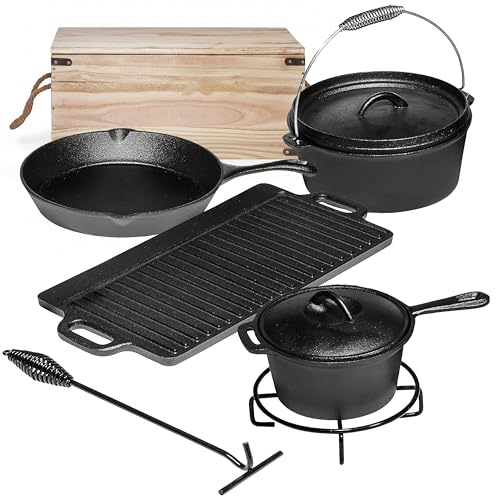


Factors to Consider
Open-fire compatibility: direct flame vs. grates
⚡ Quick Answer
Not all cast iron is built for kissing the coals. Bare, pour-cast pans tolerate direct flames and thermal abuse; enameled pieces can craze or chip under the shock of hot coals and sudden cooling. Look for pans explicitly rated for campfire or grill use if you plan to sit them on grates, embers, or hang them over a pit. Simple rule: bare iron = forgiving; enamel = delicate in the wild.
Table of Contents
Thickness, weight, and heat retention
Mass is your friend when you want steady sear and even heat — heavier pans hold temperature through a cold wind and a double-haul of meat. If you want quick temperature response for stir-frying, a thinner skillet (lighter by a pound or two) will react faster but won’t carry heat as long. For open-fire work, favor thicker bases (think +0.25" / ~6mm mass at the cooking surface) so you get even crust and less flare-driven hot spots.
Surface finish and seasoning behavior
Surface texture changes how fat and rubs behave — a slightly pebbled sand-cast surface grips oil and builds a patina fast, while silky-smooth factory finishes slide steaks for perfect release. Pre-seasoned pans get you cooking sooner, but check what oil they used — high-smoke-point polymerized coatings beat cheap wax. Remember: the best non-stick comes from repeated use over real fire, not marketing copy.
Handles, grips, and field use
Handle design matters more outdoors than in a home kitchen. Long, solid handles give you leverage on uneven grates; a stout helper handle is essential for heavy pans full of brisket fat. Avoid thin hollow handles that conduct heat like a chimney — they’ll bite your hands. Look for pans with hanging holes or compatible pan lifters if you plan to suspend over coals.
Maintenance, repair, and hard-use durability
Open-fire cooking is hard on cookware. Pick pans that can be sanded, re-seasoned, and rebaked without worrying about cosmetic chips. Learn to remove rust with steel wool, rebuild seasoning with multiple thin oil bakes, and store dry with a whisper of oil to prevent pitting. Buy once, learn to maintain it, and the pan will outlive your rotisserie.
Frequently Asked Questions
Is enameled cast iron safe for cooking directly over a campfire?
Enameled cast iron can handle moderate heat but it’s not ideal for direct coals or rapid thermal shocks — the enamel can crack or chip. Use enameled pieces for simmering over indirect heat or on grates, but stick with bare iron if you plan to put the pan in the embers or on a sagging fire pit.
How do I season a cast-iron pan for open-fire use?
Strip any factory residue, apply a thin coat of high smoke point oil (flaxseed, grapeseed, or lard), and bake at high heat until polymerized; repeat several thin layers. For open-fire seasoning, you can use the grill or coals but control the flame and rotate the pan so oil polymerizes evenly; repeat after heavy scrubbing or rust removal.
Can I leave a cast-iron pan on a hot grill or directly on coals between cooks?
You can, but be deliberate — empty pans over intense flame will develop hot spots and stress handles, and enamel finishes suffer. If you need resting heat, keep fat or a bit of oil in the pan to buffer the surface and move the pan occasionally to avoid localized overheating.
What’s the best way to remove stuck-on food or rust after outdoor use?
For stuck food, pour hot water on the still-warm pan and scrub with coarse salt or a chainmail scrubber; avoid soaking for hours. For rust, scrub with steel wool to bare metal, dry it thoroughly, and immediately apply a thin oil and heat to rebuild the seasoning layers.
What size skillet should I buy for camping and open-fire cooking?
A 10- to 12-inch skillet is the sweet spot: big enough for steaks or a family of eggs, small enough to handle and store. An 8-inch is great for solo trips, and a 14-inch is for teams and big feeds — consider weight and how you’ll lift it over the fire when choosing.
Are cheaper cast-iron pans worth it, or should I spend more?
Price alone doesn’t guarantee field-worthiness; look at construction. Solid pour-cast pans with thick bases, full handles, and minimal hollow cavities will outperform a lightweight cheap skillet every time, even if the brand name costs a bit more. Invest in a well-made pan once and you’ll spend your time cooking, not babysitting junk metal.
How often should I re-season my pan when using it on open flame?
Re-season after any aggressive cleaning, rust treatment, or when food starts sticking. With regular campfire use you’ll likely add a quick oil bake every few trips and a full seasoning rebuild once or twice a year depending on wear and how vigorously you scrub.
Conclusion
Choose a heavy, bare cast-iron skillet with a solid handle and a surface that will take punishment and build a patina — a 10–12" pan is the most versatile for pitmasters working over coals and grates. Buy for durability and practical details, not looks; the right pan will reward you with deeper crusts and cleaner heat control. Remember: mastery comes from good gear and real fire.


